Tuesday, November 8, 2016

Meditation for the win


Darnell McDonald, mental skills coordinator for the World Series-winning Chicago Cubs, says that being present helps all of us -- athletes, moms, managers -- be our best selves.

“You learn when you get to professional baseball that everyone is good. The separator is the seventh game of the World Series, the team that is able to execute under pressure, take off the autopilot button,” he says. “Everything we do, we do better in the present moment.”
And you can always find that moment, he says. "Any conscious breath you take is a meditation."

 And while meditative focus -- being able to shake off the last error and move forward with the next play, hitting the pitch that's thrown, not the one you're expecting, keeping your eye on the ball -- may have helped the Cubs in the World Series, it's not just about winning, he says.

"Practice being happy."

Watch an interview with McDonald here


Sunday, February 28, 2016

Change your mind, change the world

The first time I learned lovingkindness meditation, or metta, I was at a weekend retreat a couple of hours away from my house. As I drove home, I sent the standard wishes to the other drivers -- May you be safe, may you be happy, may you be healthy, may you live with ease -- indiscriminately, whether they sped by me or poked along so that I had to pass them, whether they sat in a lane or cut in and out of traffic.

It was a new experience and a delightful revelation, certainly a change from my usual litany of salty epithets.

The thing is, none of those other drivers had any idea what was in my head. It didn't change their experience, since I was never inclined to act out my feelings about other drivers. But it changed my experience.

That's what I forget about metta -- it's not about making the other person feel good; it's about opening up my heart. When I make the wish that another person, loved or unloved, be happy, without putting boundaries around what might make them happy, I'm creating space around my perception of that person. Do I think that person is a miserable so-and-so? May they find ease.

And when there's space, there's room for movement, there's the possibility that things will change. When I'm locked into a particular world view, that can't happen. Then, I stay in my box, you stay in yours, and we build walls. We get tense and tight and lonely.

Researchers at Google did a study about what makes an effective team. They found that the secret ingredient is  a sense of psychological safety, a ‘‘shared belief held by members of a team that the team is safe for interpersonal risk-taking.’’In other words, people felt they could share (ideas, experience, personal details) without being judged or criticized. And that atmosphere comes from the wish that others will do well, not the view that others' success is a threat to our well-being.

And that's what comes from metta practice. You stop being suspicious of other people and hope that they will be happy, be safe, find ease. You stop throwing up barriers to their happiness because their happiness doesn't threaten yours -- it increases it.

In that way metta changes the world. When you are happy that others are happy, there are infinite reasons to feel happy. When you are open to letting people show up as they are rather than locking them in boxes, they show up, like the cats in Neko Atsume. Maybe they bring you gifts.

It's the same old world, but you're seeing it differently, which is how it changes.


Sunday, February 21, 2016

Staying in bed meditation

I am lying in bed, and I want to stay there. It's warm. I'm comfortable. I feel the weight of the comforter, the cat pressed against my leg. And yet I'm not happy. I think about people who greet the day with smiles. I am not one of them. I think about what I have to do today -- nothing much. And I remember this blog post.

I recall a line from one of Sharon Salzberg's meditations that's stuck with me this week as the 28-Day Meditation Challenge focused on thoughts:

Picture your thoughts like boats on a river.

And I think OK. I bring to mind Sharon's friendly voice telling me to find a comfortable position (got that) and settle into awareness. Then to see thoughts as they arise and to let them pass, like boats on a river. To observe them, not to be them.

I don't want to get up. That's a thought, just a thought. So are the ones that follow: I'm a lazy person for lolling in bed, even though I'm awake. I'm a bad person for not having a full schedule of events planned that propel me out of bed. Those are just the garbage scows of thoughts, threatening to taint the river -- and the day -- with their trash talk.

But they are just thoughts.

And in realizing that, my experience changes. Instead of feeling like a heavy lump of last night's mashed potatoes that has to scraped forcibly out of the bed, I feel lighter. I could get out of bed. Or I could stay here a while longer -- and enjoy it instead of castigating myself for being here. It's a choice.

That's the magic of meditation. When you see that you are not the thoughts, not the anger or smugness or loneliness or the joy and the giggly bliss,  you can enjoy the experience of being aware of them, enjoy the space where you are as it is, and choose what to do next without being forced into it.

I got up.

Sunday, February 14, 2016

Doing anything with the mind of meditation

Maybe you've seen some of the dozens of stories about coloring as the new meditation. People who know I meditate send them to me and ask what I think  -- which is that coloring is not actually meditation, but it can be done meditatively.

That's true for lots of activities that people tell you are their form of meditation -- running, knitting, yoga, music. None of them are meditation, but all of them -- and pretty much anything else -- can be done meditatively. I'm reminded of Sakyong Mipham Rinpoche's book "Running with Mind of Meditation." I haven't read it -- I maybe could run across the street to save my life but that's about it -- but I so appreciate the title. It's not "Running as Meditation" but "Running with the Mind of Meditation."

What is the mind of meditation? The mind that knows where it's attention is, what's in the field of attention, what the context is. The mind that can choose where to focus attention and hold it there without being carried off into reveries or commentary or plans. The mind that can rest and be at ease with the content that arises rather than being churned up or defeated by it.

We practice that in sitting meditation. But the real benefit is being able to bring that into our lives. Practicing it in physical activities can help us do that.

In the second week of Sharon Salzberg's Real Happiness 28-day meditation challenge, she introduces several activities that can be done with the mind of meditation: Walking, eating, doing dishes.

Talking about washing dishes, she says: It tends to be an activity we do several times a day, one that we usually do while thinking through something rather than paying full attention. And it is rarely an activity we enjoy much, but might in fact find more nuanced and interesting as we pay attention.

There are lots of things we do on automatic pilot -- Thich Nhat Hanh talks about using brushing your teeth as an opportunity for meditation -- that could be used as opportunities to improve our focus, to be present with sensations, to appreciate our bodies and our circumstances. Instead of grumbling about the endless pile of dishes, we can appreciate the warmth of the water, the wonder of indoor plumbing, all of the people over time and space whose efforts brought us the food that made the dishes dirty and created the dishes themselves. Instead of feeling put upon, we can feel connected.

Sharon describes this larger focus as mindfulness, "a relational quality that frees our attention from the grip of old habits."

By being in the moment, with our hands in the hot water or holding a crayon and filling in the spaces between the lines, we see more clearly the thought filters we put over experiences: I hate housework, I'm no good at coloring, I can't knit. And once we see those, we can choose to look through them, as is our habit, or let them go and stay with things as they are.

Sunday, February 7, 2016

Balance

The word for today is balance.

In my mind, I'm picturing a surfer -- actually a surfer's feet on the board, a surfer's body, swaying, adjusting to find that balance to stay on the board, to ride the wave. The surfer does that by feel, not consciously thinking, now I have to move my weight to my left foot to counterbalance the rising water on that side, and by practice. By the time that thought could arise and the body could respond, the balance would be gone and the surfer would be a swimmer. But practice -- failing to do it and falling in, over-compensating and falling the other way -- it becomes instinctive.

In meditation, we practice finding that mental balance. We find the focus -- the breath -- and rest attention there. But sometimes we grab onto it and tighten around it, squeezing it and creating tension. Sometimes we're too relaxed and lose track of the breath, wandering off into thoughts about other things or just spacing out.

We practice finding the balance with the breath. But we bring our balance into the world.

To me, tightening my attention on the breath, grasping onto it, is the same feeling I get when I grab onto an idea of how the world should be. I can't see other options, I can't wait for this thing to arrive, I don't understand why everyone doesn't agree with me. It's a small, closed space of shallow, tight breaths.

When I loosen up, I see there's more space. My chest expands, my belly relaxes. There is air, there is room, there is no need to look ahead to the next breath -- just this one is enough. Just this one is wonderful. But staying with this one breath is important.

Sharon Salzberg writes:
When your attention is diffuse, it’s like a broad, weak beam of light that doesn’t reveal much. Concentration brings the weak beam down to a single, sharply focused, supremely bright, exponentially more illuminating point.
How can the breath be illuminating? It's just the breath; it happens whether we think about it or not. If it's not a problem, why should we notice it?

I recently heard Kate Bornstein talk about gender and aging and her Zen practice, which is to contemplate the koan, The way you do one thing is the way you do everything.

Maybe the way we approach the breath is the way we approach everything: Grasping or ignoring, chasing or controlling it, critiquing it and our powers of observing it. Maybe if we can find ease and balance with the breath, we can find that with other things in our lives. If we can stay with one breath, we can stay with one thought or one conversation instead of anticipating the next one. We can greet its arising, appreciate its fullness, and release it without regret.

It's just breath. And it's everything.


Thursday, January 21, 2016

Be here now -- while on your way there

Air travel, with its schedules and lines and inherent dangers and hyped-up threats and small seating spaces, is stressful, no matter who you are. Meditation is a way of working with stress. So it makes sense that Delta Airlines has added guided meditations to its in-flight entertainment options.

The app is called "OMG. I Can Meditate" and it's available through the Delta Studio suite of in-flight entertainment via seatback screens or on the WiFi-enable device of your choice. (It's available for nonflight meditation as an app for iPhone or Android also.) It offers a menu of several 10-minute guided meditations, with names like “Blanket of Love,” “Dealing with Anxiety,” and “Relaxing in the Clouds,” narrated by Lynne Goldberg, a meditation coach and co-founder of the app.

The OMG website is a bit breathless in extolling the benefits of meditation -- reduced stress, improved health, better love life, greater success -- although it connects all of the benefits to actual studies. It's a bit light on the news that the benefits accrue to those who have an ongoing practice of meditation. Those 10-minute bites may help for those 10 minutes and a few following, but to see long-term results you need to practice long term.

But ... making even 10 minutes of air travel more pleasant is certainly worth the effort. And if meditation can make being packed into a small space without much space to less objectionable, that might be enough to convince people of its power and to give it a try on a regular basis.

Not only does meditation reduce stress and anxiety, but it improves your physical health and well-being, decreases feelings of depression, improves memory, focus and concentration, makes you less reactive, which helps your relationships, boosts your self awareness and creativity, and to top it off, it makes you happier.

Continue reading: Why Meditate? | OMG. I Can Meditate!

Not only does meditation reduce stress and anxiety, but it improves your physical health and well-being, decreases feelings of depression, improves memory, focus and concentration, makes you less reactive, which helps your relationships, boosts your self awareness and creativity, and to top it off, it makes you happier.

Continue reading: Why Meditate? | OMG. I Can Meditate!

Saturday, November 7, 2015

The value of meditation

Maybe you've heard that meditation is good for you, that it can make you happier and healthier. And that's enough to get you interested but not enough to get you started.

How about this: It can save you money.

Rearchers at Benson-Henry Institute for Mind Body Medicine at Massachusetts General Hospital looked at some of the large body of research that's found health benefits from meditation and other mind-body practices, like yoga and tai chi, and found people who used relaxation techniques were 43 percent less likely to visit the hospital, be ordered a medical test by their doctor and to need emergency care, compared to those who did not use the practices.

To determine that, the researchers analyzed 4,000 records from patients between 2006 and 2014, who followed a doctor's recommendation to use relaxation techniques such as meditation, yoga, and tai chi in addition to medical treatment for stress-related health problems. They also looked at the records of 13,000 patients whose doctors did not make these recommendations.

The researchers found that mind-body practices resulted in annual health care savings of $2,360 per patient, based on reduced emergency room visits alone.

They estimated overall annual savings -- taking into account the costs of hospital and doctor visits, and medical tests -- of up to $25,000 per patient.


"These practices can ... decrease the anxiety associated with many health conditions, lead to improved self-awareness, and may enhance other self-care behaviors," Dr. Michelle Dossett, a physician and researcher at the Benson-Henry Institute and one of the study's authors, told The Huffington Post. "These practices can decrease a wide range of stress-related symptoms and medical conditions."
Feel better. Save money. Become a nice person because you're less stressed. Good reasons to try meditation.

Thursday, October 29, 2015

Hillary holds her seat

One of the benefits of meditation is that you become less reactive. You cultivate the ability to rest in a calm, clear space so that you can choose how to respond rather than habitually hitting back.

There may be no better illustration of that than Hillary Clinton, who was the only witness in an 11-hour highly politicized hearing having to do with the Sept. 11, 2012 attack in Libya that left four Americans dead; Clinton was secretary of the state at the time.

Clinton was widely praised for her calm, somber attitude through the day of questioning by the House Select Committee on Benghazi. How did she do it?

"I tried to meditate in the breaks," an NPR reporter overheard her say.

NPR notes that there had been no formal breaks in the hearing up to that point, so Clinton was practicing what's sometimes referred to as stealth meditation -- meditating in place so that no one knows you're doing it (as opposed to going outside to sit under a tree or locking yourself in your office). It can be done by placing your attention on an object or a sensation -- your breath, the feeling of your hands holding a pen, the warmth coming off a cup of coffee, the droning sound of a politician making a statement. The trick is to stay present, not to space out. One way to do that is to become aware of all that's happening, noticing the sound, the sensation, the movement, without becoming engaged with them -- to rest in the awareness of what's happening.

Meditating in place is a skill that's helped immensely by practicing in designated meditation sessions. If your mind has practice in resting in awareness it can find that place on the spot more easily. "If you can practice even when distracted, you are well trained," says one of the Lojong slogans. (Lojong is a system of Tibetan Buddhist mind-training slogans.)

If you can practice patience in the traffic jam with a sense of humor approach or whatever approach you want to use, you are training for really major difficulties in your life. So, it sounds silly, but actually, it’s true. If you’re sowing seeds of aggression in the traffic jam, then you’re actually perfecting the aggression habit. And if you’re using your sense of humor and your loving-kindness or whatever it is you do, then you’re sowing those kinds of seeds and strengthening those kinds of mental habits; you’re imprinting those kind of things in your unconscious. So, the choice is really ours every time we’re in a traffic jam. Pema Chodron


Tuesday, June 30, 2015

Learning to step back

When someone pushes my buttons my instinct is to push back. That may feel right in the moment, but it doesn't lead to good outcomes -- it leads to yelling and posturing and anger and, well, nothing beneficial.

One of the benefits of meditation is that it helps me find the space between the push and the push back, to let the energy dissipate instead of escalating it.

A new study shows I'm not alone.

In a working paper published by the US National Bureau of Economic Research this month, researchers found that teaching Chicago high-schoolers meditation techniques designed to help them find that gap significantly lowered crime and dropout rates for participants and boosted school attendance.

According to an article on Quartz,

The study analyzed the effects of a Chicago-based program by the organization Youth Guidance called Becoming a Man (BAM). The researchers invited 1,473 Chicago teens, chosen at random from 18 public schools, to participate in BAM programming and compared them to a control group of similar students who were not invited.

The goal of the program, explains coauthor Harold Pollack, a professor at the University of Chicago and the director of its Crime Lab, was to encourage less violent behavior by slowing their automatic response.
We develop automatic responses, or habitual reactions, to save time. The Quartz article notes that  while American teenagers from privileged backgrounds learn to automatically comply with authority figures, handing over their smartphone to a mugger, or quieting down when a teacher says so, low-income teenagers may learn that submitting to authorities only invites more aggression. 


Much of the training focused on learning to work with anger by using breathing exercises and meditation techniques, such as exhaling while counting slowly to four.  A year after the program, those who participated in the BAM program were 44 percent less likely to commit violent crimes, and performed significantly better on an academic performance index that combines academic measurements including GPA, attendance rates, and dropout rates, the study found.

Learning to find the space between the stimulus and the reaction lets us decide whether the habitual response is the best one in a given situation.  It doesn't have to be a long pause, but it can be the pause that refreshes and resets the situation rather than the one that sends it tumbling into chaos.

Saturday, June 13, 2015

Practice like a champion

My Buddhist teacher shared this photo of a T-shirt she saw someone wearing at the airport, commenting that it seems like a good message.

Practice like a champion.

Since my teacher suggested it, I have to think about it. That's the deal.

What does it mean to practice like a champion?

First of all, you do it a lot. You do it so many times that when you go into a competition, you don't think about where to put your hands or your feet; it's second nature.

You do it with precision. You practice to get better, not just to put in the time. You don't practice bad habits. You practice to correct bad habits. So you bring effort and intention to every session.

And you do it with courage. You try things that you're not sure you can do. You go out of your comfort zone. That's how you learn to do more than when you started.

It's more obvious in some other versions of the shirt that I found online than this one, but the whole slogan is "Practice like a champion/Act like a champion."

That's also a good reminder. You practice with diligence and clarity and intention during meditation so that you bring that to your post-meditation practice. That's why you do it, really -- not for 20 minutes of calm and escape from the torment of thoughts but for a less-stressful life. 

I wrote a blog post a few weeks ago about how you can't win at meditation. There's no score. There's no winner and loser -- you're succeeding when you stop comparing yourself to others, when you stop seeing that you're in competition with everything.

Practice, though, is about working with yourself, honing your instincts, correcting habits that make life harder.


So when I sat down on my cushion this week, I said to myself, Practice like a champion. And I sat straighter, applied effort more precisely, and felt more confident. For real.

While I couldn't find a source for the slogan, it seems to be connected often with cheerleading. On a lot of the shirts, the front says, "Cheer like a beast."

A garuda, maybe, or a turquoise dragon. Or, maybe, say your mantras with a Lion's roar of confidence.


Thursday, June 4, 2015

Meditation changes your brain

It's hard to keep up with all of the medical studies involving meditation, which seem to universally document its benefits.

This Washington Post interview with Harvard neurologist Sally Lazar gives a clear summary of some important findings from a study that put a group of people through an eight-week mindfulness meditation program:

Lazar: We found differences in brain volume after eight weeks in five different regions in the brains of the two groups. In the group that learned meditation, we found thickening in four regions:
1. The primary difference, we found in the posterior cingulate, which is involved in mind wandering, and self relevance.
2. The left hippocampus, which assists in learning, cognition, memory and emotional regulation.
3.  The temporo parietal junction, or TPJ, which is associated with perspective taking, empathy and compassion.
4. An area of the brain stem called the Pons, where a lot of regulatory neurotransmitters are produced.
The amygdala, the fight or flight part of the brain which is important for anxiety, fear and stress in general. That area got smaller in the group that went through the mindfulness-based stress reduction program.
The change in the amygdala was also correlated to a reduction in stress levels.

You may just notice that you experience moments of calmness. Meanwhile, your brain is working hard.

Thursday, May 14, 2015

Testing meditation's effects

One of the reasons for meditating -- sitting still and focusing on an object, such as the breath -- is to train in tapping into the calm space in your awareness so that you can find that space in the midst of chaos.

Like on stage during the National Geography Bee.

Karan Menon, an eighth-grader from New Jersey, won the high-pressure event on Wednesday. And meditation helped.

The Associated Press reports:

Knowledge and memorization weren't the keys to victory — Karan said it was about focus. He took deep breaths and meditated between questions.

"Everyone here is equal," Karan said. "When it comes to the competition, you have to control your mind. You have to adapt to all this, like, millions of tons of pressure that's coming on you."
If meditation could help Karan --  on stage, in front of a national television audience being questioned by Soledad O'Brien -- imagine what it can do for you when you're stuck in traffic or making a presentation or waiting for a phone call or living through any other stressful event. Or just in life.

And you'll still experience the joy.

Karan Menon reacts upon winning the National Geography Bee. (AP)

Friday, April 10, 2015

Breathing

The 17th Karmapa, head of one of the Tibetan Buddhist lineages, is touring the US, visiting sites such as Google, Facebook, and a number of colleges and universities. He's also meeting with Tibetan Buddhists, and in one of his appearances offered detailed commentary on meditation:

He noted that one of the most widely known forms of meditation involves focusing one’s attention on the breath. “One of the reasons for this,” he commented, “is that we are breathing all the time. Because our breath is an ongoing, pre-existing thing, it does not have to be created for the purpose of meditation.” This underscores the fact that meditation is not aimed at seeking out new experiences or reaching some new state. Rather, he stated, we notice the breath by directing our mind to what is already present, without altering or fabricating anything. “We are simply using the awareness of breathing as a focus for developing the mind’s ability to be aware of a chosen object,” the 17th Karmapa said.

“I think there is another particular reason for focusing the mind on breathing,” he added. “The breath is critically necessary for us to remain alive — after all if we stop breathing we stop living. We normally pay no attention to it but take it for granted. Therefore when you focus your mind on the breath, this also instills in you a greater appreciation of being alive, a sense of delight or rejoicing in the fact that your life is continuing.”

He then reflected on the methods used for meditating on the breath, noting that one way is to count the breath. “But,” he observed, “counting can be difficult and actually become a distraction. This depends on the individual, but for many people, using the counting breath technique is problematic. There are other traditions in which one does not count the breath. One simply observes the in-breath and the out-breath, allowing one’s mind to be merely aware of the breathing, allowing one’s mind to rest on or in the exhalation and inhalation. I think this may be better than counting.

“As for how one breathes when directing the mind to the breath,” he continued, “one should breathe naturally as one does usually. There is no special manipulation or control of the breathing. You do not try to breathe in and out with more force or slow down the breathing or speed it up or anything like that. I mention this because sometimes people expect that a technique where the mind is focused on the breathing would involve some kind of special manipulation or control of the breath, but in this case it does not. The breathing is ordinary. No special effort is needed.”

“The point of this,” he said, “is that while we breathe tens of thousands of times every day, we usually pay no attention to it and are often completely unaware that we are breathing. We continue to breathe, but we do not notice that fact. Here what we are trying to do is notice the breath by directing our mind to it.”
Commenting on posture, he said, it should be straight and erect posture, either cross-legged or in a chair. "The point of posture is that the breathing be easy and relaxed.”

“The aim of meditation practice,” he said, “is to return to our own nature and to sustain the natural state of our mind. It is like returning home from a journey. We want to be able to come to rest and relax in that. Therefore meditation is not the alteration of the mind’s natural condition, nor is it the superimposition or exaggeration of anything. Especially in the practice of shamatha meditation, this is the most important point. We are trying to come to rest in our ordinary, natural state of mind.”

Sunday, March 15, 2015

Mindulness at Work

Insurance companies aren't known for taking risks on unproven methods. So when Aetna CEO Mark Bertolini -- who had personal experience with the healing benefits of yoga and meditation -- wanted to spread the practices to Aetna's employees, he looked for data. As David Gelles describes in the New York Times' article, "At Aetna, A CEO's Management by Mantra," Aetna did its own research.

More than 13,000 Aetna employees -- just over a quarter of the company's 50,000 employees -- have taken the free yoga and meditation classes, and Aetna offers those programs to businesses that contract with it for health insurance.

Those who have taken part report, on average, a 28 percent reduction in their stress levels, a 20 percent improvement in sleep quality, and a 19 percent reduction in pain. (The study relied on self-reporting, but also checked heart rate and cortisol levels, which backed up the self-reports.) They also become more effective on the job, gaining an average of 62 minutes per week of productivity each, which Aetna estimates is worth $3,000 per employee per year. Additionally, Aetna's heath care costs fell after it introduced meditation and yoga classes in 2012.

Aetna's not alone in offering meditation classes -- Google, General Mills, and Coca-Cola also have programs. Janice Maturano, who developed General Mills' programs, now consults with other companies as demand for such programs has increased.

Should meditation become a standard part of the workday? Given the importance of motivation or intention to progress in meditation, what happens if meditators don't have a choice about being there? Will it reduce stress if people are stressed about having to go? Will mindfulness techniques, which encourage people to connect with and accept things as they are, discourage creative thinking or encourage people to accept unfair or abusive treatment?

In The Harvard Business Review, psychiatrist David Brendel questions whether the rush to mindfulness is being done, well, mindlessly. Brendel says some of his clients use mindfulness to avoid critical thinking about difficult situations. "I’ve worked with clients who, instead of rationally thinking through a career challenge or ethical dilemma, prefer to disconnect from their challenges and retreat into a meditative mindset. The issue here is that some problems require more thinking, not less."

It's also a problem, he says, when companies force mindfulness sessions on employees.

As Brendel writes:
Mindfulness practices should be used to enhance our rational and ethical thinking processes, not limit or displace them. ... At its very core, mindfulness culture will be a huge step forward for Western cultures if it stays focused on creating opportunities for individuals to discover their own personalized strategies for taming anxieties, managing stress, optimizing work performance, and reaching genuine happiness and fulfillment.


Sunday, February 8, 2015

Meditation can help keep brains young: Study

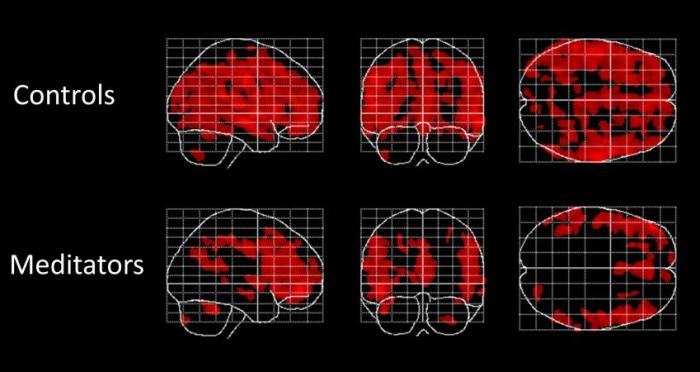
Researchers at the Brain Mapping Center at the University of California-Los Angeles have found that meditation may be associated with better preservation of gray matter in the brain - the neuron-containing tissue responsible for processing information.

The brain -- like the rest of the body -- deteriorates as we age. But in a study that looked at 100 people -- 50 with at least four years of meditation experience and 50 non-meditators -- they found the meditators had more gray matter throughout their brains.

The red areas show brain regions affected by gray matter loss; the researchers found people who meditated had better preservation of gray matter.
Image credit: Dr. Eileen Luders
  

Read more here

Thursday, February 5, 2015

The scientific power of meditation


AsapSCIENCE looked at the research on meditation and created this 3-minute video. Here are seven benefits, as listed by Business Insider:

1. Meditation can help you deal with stress and negative emotions.
Multiple studies have shown that meditation can help reduce levels of depression and anxiety, along with helping people tolerate pain better. The researchers conclude that mindfulness meditation in particular might help people deal with psychological stress, though they say that more research is needed into how meditation might help lead to positive mental health (beyond reducing effects of negative stresses).
2. At the same time, meditation could boost positive skills like memory and awareness.
Research shows that meditators have unique brains with well-developed areas that might be connected to the mastery of awareness and emotional control. While it's possible that people with such brains might be more likely to meditate in the first place, other research does show that after completing a meditation program there are changes in participants' brains that are connected to memory, self-awareness, and perspective.
3. Meditating for years is associated with brain changes that help you get along with others.
Buddhist monks and other long term meditation practitioners show much more developed brain regions associated with empathy, though the reasons for that are likely complex. Researchers have seen that meditation can also change brain waves, leading to higher levels of alpha brain waves — which are generally associated with a state of wakeful relaxation. This can help reduce negative moods and feelings including anger, tension, and sadness.

4. It doesn't take long to see meditation's benefits — just weeks can change your brain.
Several studies show that after an eight-week meditation program, participants had denser brain tissue in areas connected to learning, emotion regulation, and memory processing.
Additionally, they showed decreased amounts of grey matter in parts of the amygdala, a brain area connected to fear and stress. In a study published in Social Cognitive And Affective Neuroscience, researchers write that in general, people who stimulate an area of the brain repeatedly (generally by learning a skill) show an increase in grey matter, while not using an area of the brain decreases grey matter in that area. They write that in this case, participants who reduced their stress response the most were the ones that showed the biggest decrease in grey matter in this area of the brain.
5. The benefits of meditation extend to other parts of your body too, including your heart.
Mindfulness training has been connected to decreased blood pressure and a more variable heart rate — which is a good thing, meaning your body can better regulate blood flow depending on how much oxygen you need at the time. Researchers (and the American Heart Association) say a likely mechanism for this is that meditation could reduce the levels of stress hormones that can cause inflammation and other physical problems.
6. There are also signs that meditation can help boost your immune system — or at least help ward off the flu.
In a study, researchers took two groups of people and had one group complete an eight week meditation course. At the end of the eight weeks, the people in the meditation group showed increased left-side brain activity. At that point, the researchers injected both groups with the flu vaccine. The meditators had a stronger immune response (their bodies produced more flu-fighting antibodies), and the higher the level of left-brain activity in general, the greater the immune response.
7. Meditation may help prevent genetic damage.
One study showed that cancer survivors who completed a meditation program showed increased telomere length — telomeres are protein complexes that protect our genes, and shortened telomeres have been linked to various diseases. Researchers say that the possible mechanism for this is that reducing stress could help certain enzymes that lengthen telomeres, though more research in more diverse populations is needed.


Tuesday, January 6, 2015

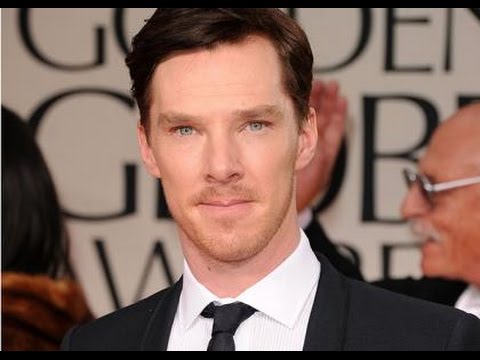
The impermanence of Benedict Cumberbatch

The ubiquitous Benedict Cumberbatch shockingly enough takes time for himself -- in addition to
appearing in TV, film, and on award shows for both of those. He tells the Wall Street Journal:

I meditate a lot. That’s a huge tool in trying to calm myself, get away from the crazy circus of it all, have a focused mind as well as be a kinder, considerate person in the world. I took a lot of stuff away from my experience in Darjeeling, West Bengal, right at the Nepali border. It was Tibetan Buddhist monks in a converted Nepali house in India, with a view of Bhutan. It was a profoundly formative experience at a very young age. It’s something I’ve tried to keep in my life. It features already.
(Cumberbatch took a semester off from college to teach English to Tibetan monks in India."
"There's an ability to focus and have a real sort of purity of purpose and attention and not be too distracted. And to feel very alive to your environment, to know what you are part of, to understand what is going on in your peripheral vision and behind you, as well of what is in front of you. That definitely came from that."
But I think it's a question about fear of failure, not meditation directly, that shows how it works:

Also, it’s important sometimes to step back and not take it too seriously, in order to be free and light and remember the childish innocence. You should be alive to the moment, you should be able to play. While a hell of a lot of work goes into the most seemingly off-the-cuff stuff in our industries, I think it’s really important in those moments when you’re delivering that lightness to be free of all of that. You play the scene. You really look into people’s eyes, what they’re saying, and everything else sort of falls back. You get those wonderful moments of clarity – they’re not Eureka! moments but they’re as close to it as acting gets, where you are lost in the moment. I challenge any actor, whatever methodology, to say that that’s a permanent state.

Friday, January 2, 2015

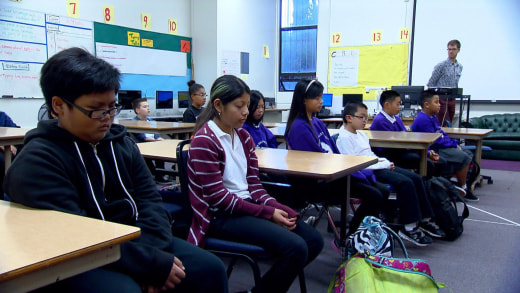
Meditation helps students cope

During the four years since Vistacion Middle School in San Francisco instituted twice-daily 15-minute meditation sessions, suspensions dropped by 79 percent and attendance and academic performance improved, NBC reports.

Nearby Burton High School, once nicknamed "Fight School," has seen similar results. The principal, Bill Kappenhagen, was skeptical -- and he didn't want to take time from academic instruction for students to do nothing. He made the school day 30 minutes longer to provide time for meditation. The result, he said, is better academic performance and a 75 percent decrease in suspensions. And students say they're more conscious of their actions, calmer, and less angry. 

The San Francisco Public School District partnered with the Center for Wellness and Achievement in Education for the meditation program, called "Quiet Time," in four schools. 

NBC News
The schools are in neighborhoods where violence is part of daily life. Kappenhagen says he can't change that environment, but he's glad meditation "helps our students find ways to deal with violence and the trauma and the stress of everyday life." 

For details on Quiet Time go here.

Saturday, December 20, 2014

Anderson Cooper explains it all

Anderson Cooper: I don't feel I'm very present in each moment. I feel like every moment I'm either thinking about something that's coming down the road, or something that's been in the past.

Jon Kabat-Zinn: So ultimately all this preparing is for what? For the next moment, like the last moment, like, and then we're dead (laugh) so in a certain way...

Anderson Cooper did a segment on mindfulness for "60 Minutes." If you're curious about what it is and how it works, he (and Kabat-Zinn, credited with popularizing mindfulness meditation in the West) explain it.

You can read the script or watch the video here

Also check out the "extra" on how mindfulness has changed his life.

It can change yours too.


Wednesday, December 3, 2014

Let peace be part of your life

"When I talk about peace, people sometimes mistakenly think that this means detaching yourself from the stream of life. They view peace as if it were something strange, maybe a numbed or sleepy feeling, or being spaced-out and in a different mental zone. This couldn’t be further from the truth. You can be ‘‘peaceful’’ when you are asleep, but that is only the absence of consciousness. The way to truly heal your life is to be awake to its simple joys and to develop an open, welcoming attitude toward all your activities and encounters with other people. You should enjoy yourself and be fully engaged in what you do.

Notice when you feel open and peaceful. Be aware of any feeling of freedom. Awareness is the key. If you are aware of peace, it has a chance to become part of your life. When you feel peaceful, enjoy it. Don’t force your feelings or chase after them or stir up false excitement. There’s no need to grasp. Simply be aware and let the feeling blossom and open. Allow it to expand. Stay with any positive feeling; allow your mind to relax in it. You may find your body feeling peaceful, too. If your breathing feels more relaxed, or you feel a sensation of warmth, pause to notice that as well and enjoy it."
 - Tulku Thondop